
10 Surprising Facts About Nordic Ice Skating You Never Knew
Discover Sweden’s Most Unique Winter Adventure
Discover fascinating facts about Nordic ice skating in Sweden. Learn why wild skating on frozen lakes around Stockholm is one of the most unique and underrated winter activities for travellers.
Did You Know? Fascinating Facts About Nordic Ice Skating in Sweden
Nordic ice skating — also known as wild skating, Nordic touring, or long-distance skating — is one of Scandinavia’s most magical and least-known winter traditions. While Swedes have been gliding across frozen lakes for generations, many travellers have never even heard of this extraordinary outdoor activity.
Here are some unexpected, unusual, and fascinating facts about Nordic ice skating that will make you see Sweden’s winter landscape with new eyes.
1. Nordic Ice Skating Is Thousands of Years Old
Long before the Vikings sailed the seas, people in northern Europe travelled across frozen lakes using bones tied to their feet. Some of these early “skates” are over 5,000 years old, making Nordic skating one of the oldest winter travel methods in history.
2. Sweden Has Some of the Clearest Natural Ice in the World
During the coldest winter weeks, Stockholm’s lakes transform into glass-clear ice, where you can see stones, bubbles, cracks, and plants beneath your feet. It’s like skating on top of a frozen universe.
3. The Ice Makes Strange Sci-Fi Sounds
As ice expands and contracts, it creates deep, laser-like echoes that bounce across the lake. These “singing ice” sounds can be heard kilometres away — a natural soundtrack to the Swedish winter.
4. Skating on Natural Ice Is Faster Than You Think
With long blades designed for wilderness travel, Nordic skaters can glide 10–20 km/h with ease, making it possible to explore multiple lakes in one day.
5. Every Day on the Ice Is Completely Different
Temperature, wind, and snow constantly shape the surface. One day you skate on black, mirror-smooth ice; the next day you find white, textured ice shaped by frost and weather. Nordic skating is a true frozen adventure.
6. Swedes Learn Ice Safety Before Anything Else
Knowing how to read ice conditions is part of Swedish outdoor culture. Locals learn to:
measure ice thickness
detect weak spots
listen to cracks
use ice safety tools
It’s not only a sport — it’s a conversation with nature.
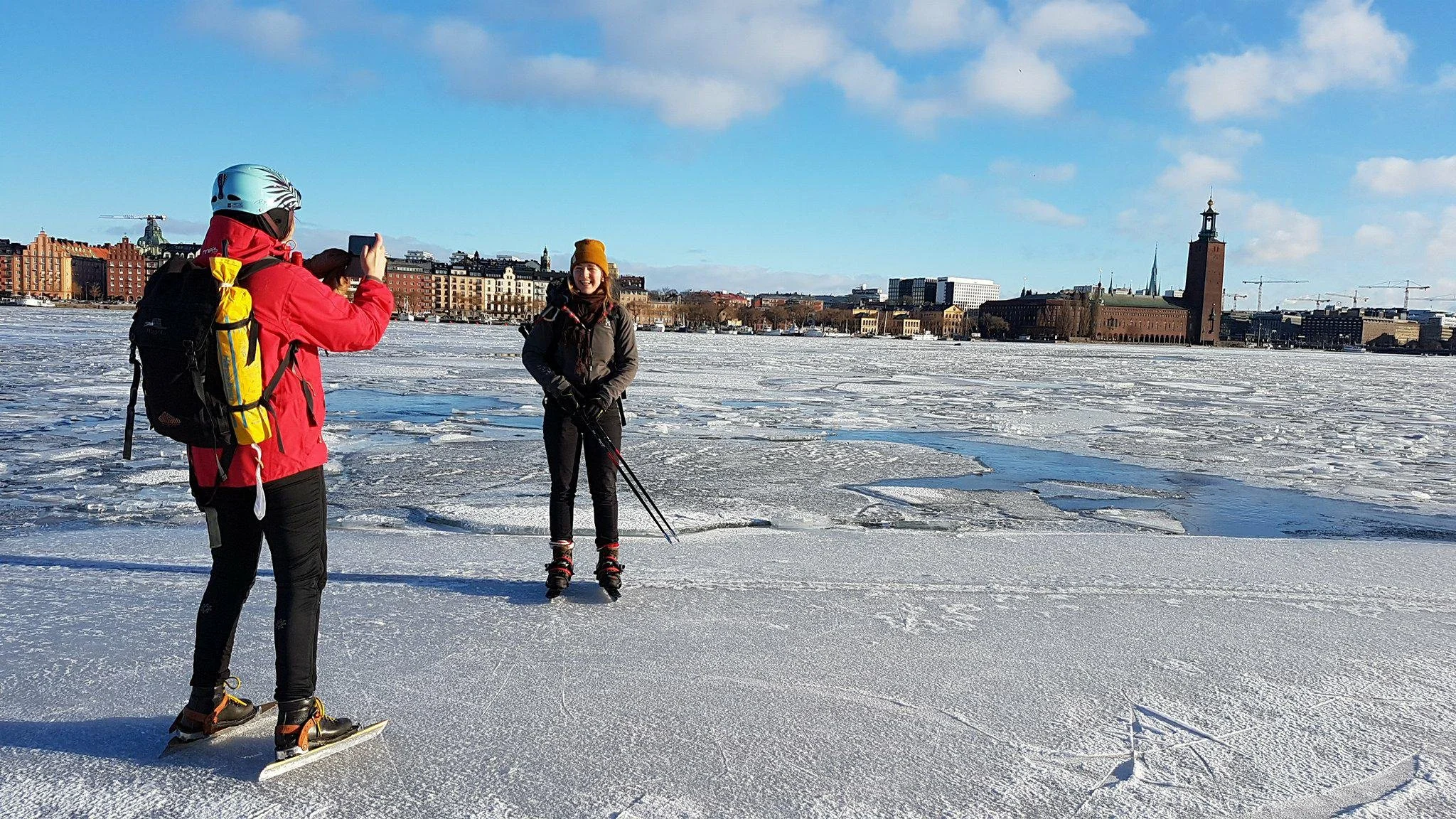
7. Wild Skating Is Like Winter Hiking on Ice
Nordic ice skating combines movement, exploration, and silence. It’s similar to hiking or kayaking, except the entire landscape becomes a frozen trail. You travel from lake to lake, surrounded by forests and snow-covered islands.
8. The Best Ice Appears After Freezing, Windless Nights
These conditions create perfect “black ice”, famous among skaters for being incredibly smooth and fast — the holy grail of Nordic ice skating.
9. It’s Hugely Popular in Sweden — But Still a Secret to Tourists
Thousands of Swedes follow daily ice reports and chase the best skating conditions. Yet most international visitors don’t even know this activity exists. It’s one of the best-kept winter secrets in Stockholm.
10. Stockholm Has Dozens of Wild Skating Locations
Within 30–60 minutes of the city, you’ll find countless frozen lakes and natural reserves. This makes Stockholm one of the world’s best places for a Nordic skating day tour.
Why Nordic Ice Skating Should Be on Your Bucket List
If you’re planning a winter trip to Sweden, Nordic ice skating offers a rare chance to experience the country like a local. It’s adventurous, peaceful, scenic, and deeply connected to Swedish outdoor traditions.
You’re not just seeing the landscape — you’re gliding through it.
Ready to Try Nordic Ice Skating in Stockholm?
If these facts have sparked your curiosity, you can discover this incredible winter activity for yourself. Join a guided Nordic Ice Skating Experience in Stockholm and explore frozen lakes, national parks, and breathtaking winter scenery with professional guides. Perfect for beginners, families, and adventure seekers.